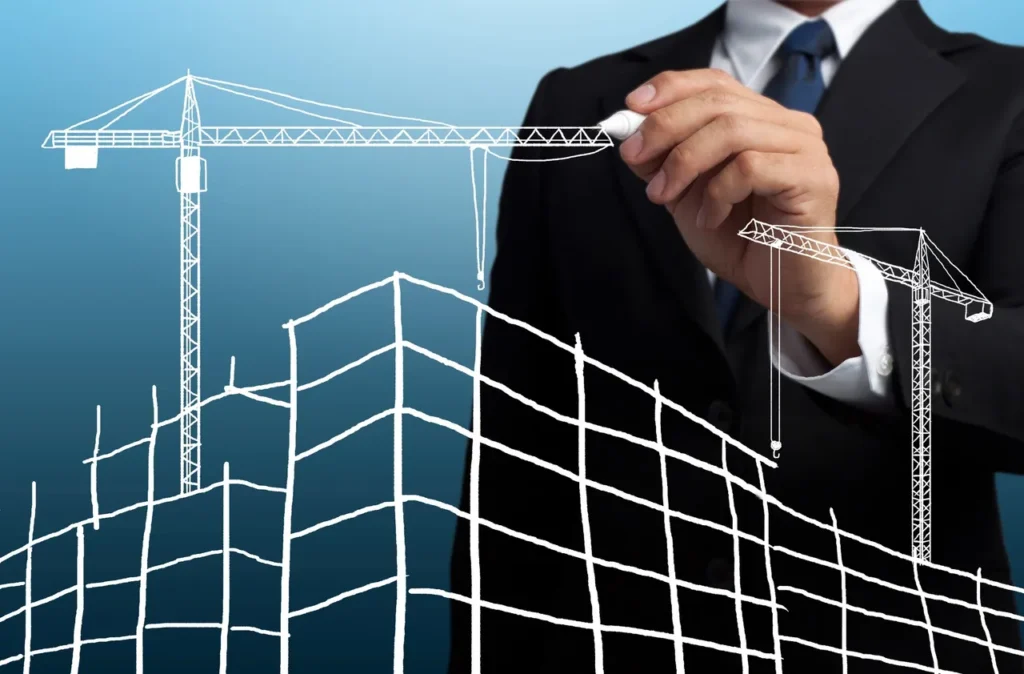

The Failure Usually Happens Long Before the First Cable Is Pulled
Most organizations assume infrastructure projects fail during construction.
They picture missed deadlines. Vendor mistakes. Budget overruns. Equipment delays. Change orders multiply like gremlins after midnight.
But the real collapse often happens months earlier, quietly, during planning.
The blueprint looked complete. The scope felt “good enough.” Everyone nodded through kickoff meetings. Then reality arrived with steel-toe boots.
Infrastructure projects rarely fail because people stop working. They fail because teams start building on assumptions instead of alignment.
When that happens, every downstream phase inherits the instability:
- Procurement becomes reactive
- Vendors interpret requirements differently
- Budget forecasting drifts
- Construction sequencing breaks
- Operational teams lose confidence
- Leadership visibility disappears
The project becomes a moving target wrapped in expensive optimism.
The Root Problem: Undefined Infrastructure Governance
Infrastructure governance sounds abstract until its absence starts costing money.
Governance is the system that answers:
- Who owns decisions?
- What standards apply?
- How are priorities validated?
- What defines project success?
- How are risks escalated?
- Which assumptions have been verified?
Without those answers, projects drift into ambiguity.
And ambiguity is expensive.
Especially in environments involving:
- campus connectivity
- telecommunications infrastructure
- MDF/IDF modernization
- structured cabling
- security systems
- cloud communications
- multi-site deployments
- data center transitions
Every disconnected assumption compounds later during implementation.
The “Looks Fine on Paper” Trap
One of the most dangerous moments in infrastructure planning is when a project appears organized enough to proceed.
At this stage:
- budgets are preliminary
- dependencies are incomplete
- operational impacts are underestimated
- standards may not exist
- infrastructure documentation is outdated
- procurement timelines are aspirational
But momentum takes over.
Leadership wants movement. Teams want progress. Vendors want direction.
So projects launch before critical alignment occurs.
The result is a project that begins fast and finishes painfully.
Five Early Warning Signs Your Project Is Already at Risk
1. No Unified Infrastructure Standards
If every site, building, or department interprets infrastructure differently, implementation consistency disappears immediately.
This creates:
- incompatible systems
- inconsistent documentation
- operational complexity
- higher lifecycle costs
2. Procurement Begins Before Scope Validation
Organizations frequently issue RFPs before validating operational requirements.
That creates vendor responses based on interpretation instead of precision.
And vendors will always fill gaps differently.
3. Existing Conditions Are Poorly Documented
Outdated network diagrams and incomplete fiber documentation become landmines during construction.
Teams cannot modernize what they cannot accurately map.
4. Project Sequencing Ignores Operations
Infrastructure work affects people, not just equipment.
Poor phasing can disrupt:
- classrooms
- healthcare operations
- manufacturing
- public services
- communications
- security systems
Operational continuity must be engineered into the project from the beginning.
5. Leadership Visibility Is Reactive
If executives only receive updates after problems emerge, governance has already failed.
Strong projects create proactive visibility:
- milestone tracking
- risk reporting
- budget forecasting
- decision accountability
Infrastructure Planning Is No Longer Just an IT Exercise
Modern infrastructure touches nearly every operational system:
- security
- facilities
- communications
- cloud platforms
- business continuity
- compliance
- user experience
That means infrastructure planning must bridge technical and operational leadership.
The organizations seeing the best outcomes are treating infrastructure modernization as a strategic business initiative, not a standalone technical deployment.
That shift changes everything:
- planning becomes more intentional
- standards become scalable
- procurement becomes defensible
- risk becomes measurable
- projects become executable
What Successful Organizations Do Differently
High-performing organizations slow down before they speed up.
They invest heavily in:
- infrastructure assessments
- standards development
- lifecycle planning
- governance frameworks
- operational sequencing
- stakeholder alignment
- resiliency planning
Because they understand something critical:
The most expensive infrastructure mistake is building the wrong thing efficiently.
Final Thought
Infrastructure projects succeed when planning becomes rigorous enough to remove ambiguity before execution begins.
Not after.
The organizations that modernize successfully are rarely the ones moving fastest at the beginning.
They are the ones aligning earliest.
And in infrastructure planning, alignment is what turns complexity into momentum.
Need help validating your infrastructure strategy before procurement or construction begins?
Schedule an infrastructure planning and governance assessment to identify risk, improve alignment, and create a scalable execution roadmap.