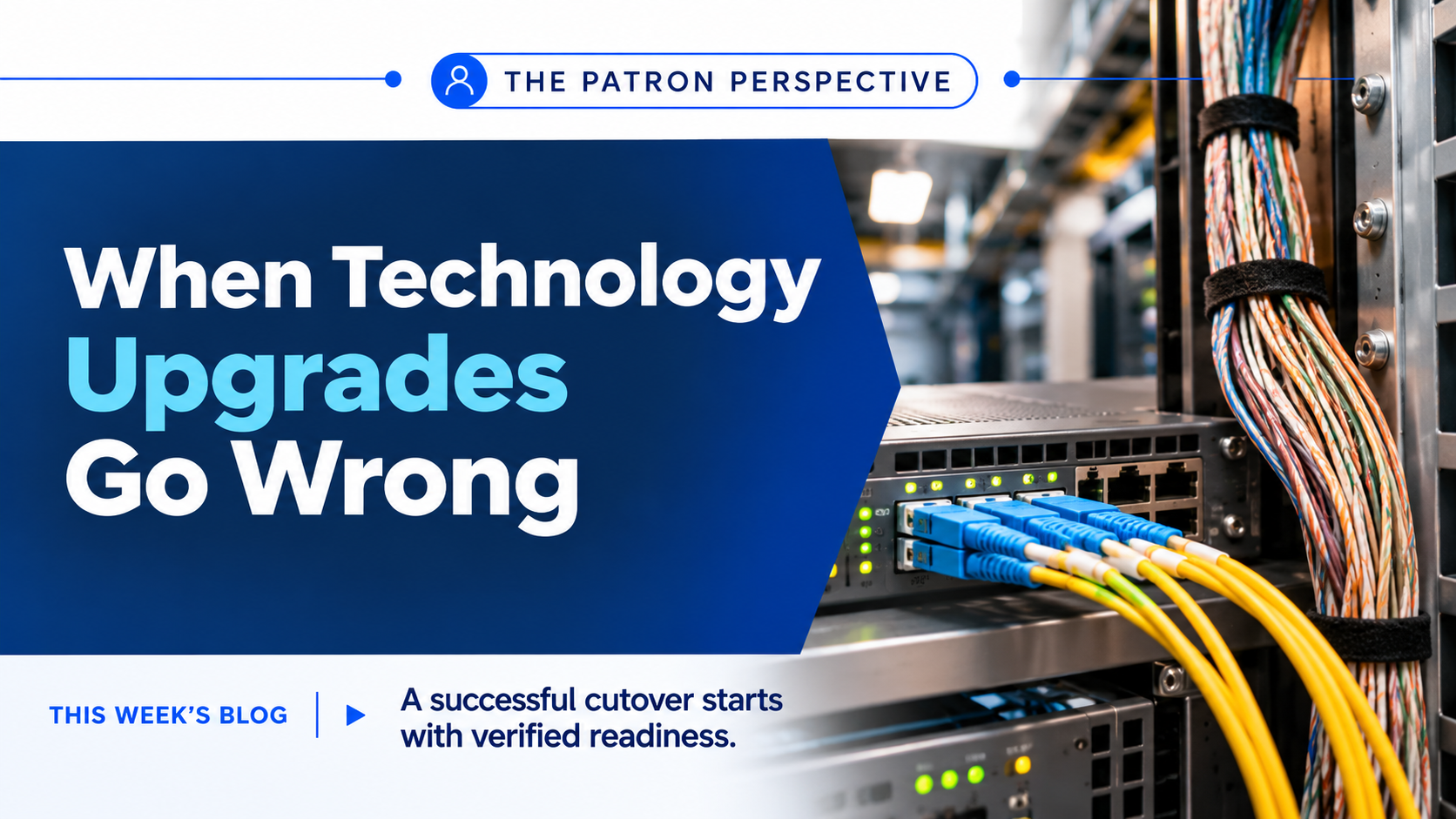
Modernizing aging technology infrastructure is necessary. But when an upgrade affects systems that cannot afford extended downtime, the transition itself can present as much risk as the infrastructure being replaced.
A recent nationwide aviation disruption illustrates the consequences when problems emerge during critical infrastructure modernization.
According to reporting by the BBC, maintenance associated with replacing aging copper telecommunications wiring with fiber-optic infrastructure preceded a technical failure that disrupted air traffic control communications. A router being worked on reportedly began flooding other systems, contributing to a nationwide suspension of flight departures lasting approximately four hours.
More than 15,000 flights were delayed or cancelled that Friday, affecting an estimated 1.5 million passengers. Disruptions continued into the following day.
Investigators have not yet determined whether the underlying problem involved the cable replacement, router equipment, or the work performed during the upgrade.
Regardless of the eventual findings, the incident highlights an important consideration for every institution responsible for critical technology systems: infrastructure modernization requires careful coordination between what is being installed, what already exists, and what must remain operational throughout the transition.
Replacing Infrastructure Is Not the Same as Understanding It
Aging infrastructure presents challenges that extend beyond outdated equipment.
Over time, institutional networks evolve through expansions, repairs, temporary connections, and changing operational requirements. Documentation may not reflect current conditions, and systems originally designed to operate independently may have developed shared dependencies.
These conditions become particularly important during major infrastructure replacements.
A project involving copper-to-fiber conversion, for example, may appear straightforward when viewed primarily as a cabling upgrade. However, the transition can involve network electronics, communication protocols, routing configurations, connected applications, and operational systems that depend on uninterrupted service.
Replacing a physical connection does not automatically preserve the behavior of the systems using it.
Before execution, project teams need to establish an accurate understanding of existing infrastructure, identify critical dependencies, and determine how proposed changes may affect connected services.
That work often requires more than reviewing drawings or equipment inventories. Physical verification, configuration reviews, and coordination with the people responsible for operating the environment are equally important.
A Cutover Plan Must Account for What Could Go Wrong
Cutover planning is sometimes treated as a scheduling exercise.
A maintenance window is established, personnel are assigned, and a sequence of technical activities is documented. While these steps are necessary, they do not establish that the organization is prepared to manage an unexpected failure.
A complete cutover plan must identify the conditions required before work begins and establish how the team will respond if those conditions change.
This includes validating the existing environment, testing replacement equipment, confirming system dependencies, and determining which services could be affected by each stage of the transition.
For critical systems, the plan should also define how operational performance will be monitored during the cutover.
A configuration may appear correct while introducing unexpected traffic behavior or affecting systems outside the immediate project scope. Detecting those conditions early can make the difference between a controlled interruption and a prolonged outage.
Testing individual components is necessary. Understanding how those components interact with the broader operating environment is just as important.
Recovery Must Be More Than a Documented Intention
Every significant infrastructure cutover should include a practical recovery strategy.
That strategy needs to identify what can be restored, how restoration will occur, and how long the process is expected to take.
A general instruction to return to the previous configuration is not sufficient when changes involve interconnected systems, multiple contractors, or infrastructure that cannot easily be returned to its original condition.
Recovery procedures should be reviewed and, where practical, tested before the transition begins.
Equally important is establishing clear authority for deciding when to stop work.
When unexpected problems occur, technical teams naturally focus on resolving them. Without predetermined decision points, troubleshooting can continue beyond the time available for a controlled recovery.
A well-prepared cutover establishes the conditions that require escalation, suspension of work, or restoration of the previous operating environment.
These decisions should not have to be negotiated for the first time during an outage.
Contractor Oversight and Institutional Accountability
Complex infrastructure upgrades frequently involve outside contractors, equipment manufacturers, internal technology teams, and operational departments.
Each participant may be responsible for a specific portion of the project. However, completing individual assignments does not necessarily establish that the entire environment is ready for transition.
The institution ultimately remains responsible for the operational consequences.
This is why independent project oversight matters.
Someone must verify that the proposed work aligns with actual infrastructure conditions, that technical dependencies have been addressed, and that the cutover sequence has been reviewed by the appropriate stakeholders.
Someone must also confirm that recovery procedures are realistic and that responsibility for critical decisions is clearly assigned.
Contractors bring specialized technical expertise. Independent oversight helps ensure that their work is coordinated with the institution’s broader operational requirements.
The distinction becomes particularly important when several parties share responsibility for systems that must continue operating throughout an upgrade.
Readiness Should Determine When the Cutover Happens
Technology modernization projects often face substantial pressure to meet established schedules.
Equipment availability, contractor commitments, funding requirements, and limited maintenance windows can all influence when work is expected to occur.
Those constraints are legitimate, but they should not override unresolved readiness concerns.
If infrastructure dependencies remain unverified, recovery procedures are incomplete, or operational responsibilities are unclear, the institution may be accepting risks it does not fully understand.
Delaying a cutover under those conditions can be a responsible project decision.
The recent aviation disruption demonstrates how a technical problem during infrastructure modernization can extend far beyond the equipment being upgraded.
It does not establish that better cutover planning would necessarily have prevented this particular incident. That determination belongs to the investigation.
It does reinforce why institutions must approach critical infrastructure transitions with a clear understanding of existing conditions, documented recovery procedures, and coordinated accountability.
At Patron Projects, we believe successful infrastructure modernization begins with understanding the environment and protecting the institution’s operational interests throughout the project.
The equipment upgrade is only one part of the work. Maintaining control during the transition is what makes the project successful.