A professional higher education campus scene at dusk with subtle cybersecurity overlays integrated into the environment. In the foreground, students and faculty walk across campus naturally while transparent digital network lines and shield icons appear layered into the architecture and pathways. The atmosphere should feel calm, controlled, and credible rather than alarming. Use deep navy, muted blue, and soft white tones with clean lighting and realistic detail.
Cybersecurity in higher education is not a new concern. What has changed is the gap between what institutions believe is protected and what is actually exposed.
Most campuses carry a mix of aging infrastructure, undocumented pathways, and systems added over time without a single point of accountability. On paper, protections exist. In practice, those protections often rely on assumptions that have never been verified.
The result is not always a dramatic breach. More often, it is quiet risk. Data that is accessible when it should not be. Systems that appear segmented but share unseen dependencies. Recovery plans that exist in documents but have not been tested under real conditions.
Where Risk Actually Lives
Cybersecurity conversations tend to focus on tools. Firewalls. Monitoring systems. Endpoint protection.
The problem is rarely the absence of tools. It is the absence of clarity.
In many environments:
• Network paths converge into single points of failure without being recognized
• Backup systems exist but are not independently validated
• Access controls are defined but not consistently enforced
• Institutional silos prevent a complete view of risk
These are not technology failures. They are coordination failures.
The Limits of Policy Alone
Policies are necessary. They define intent and expectations.
But policy does not confirm reality.
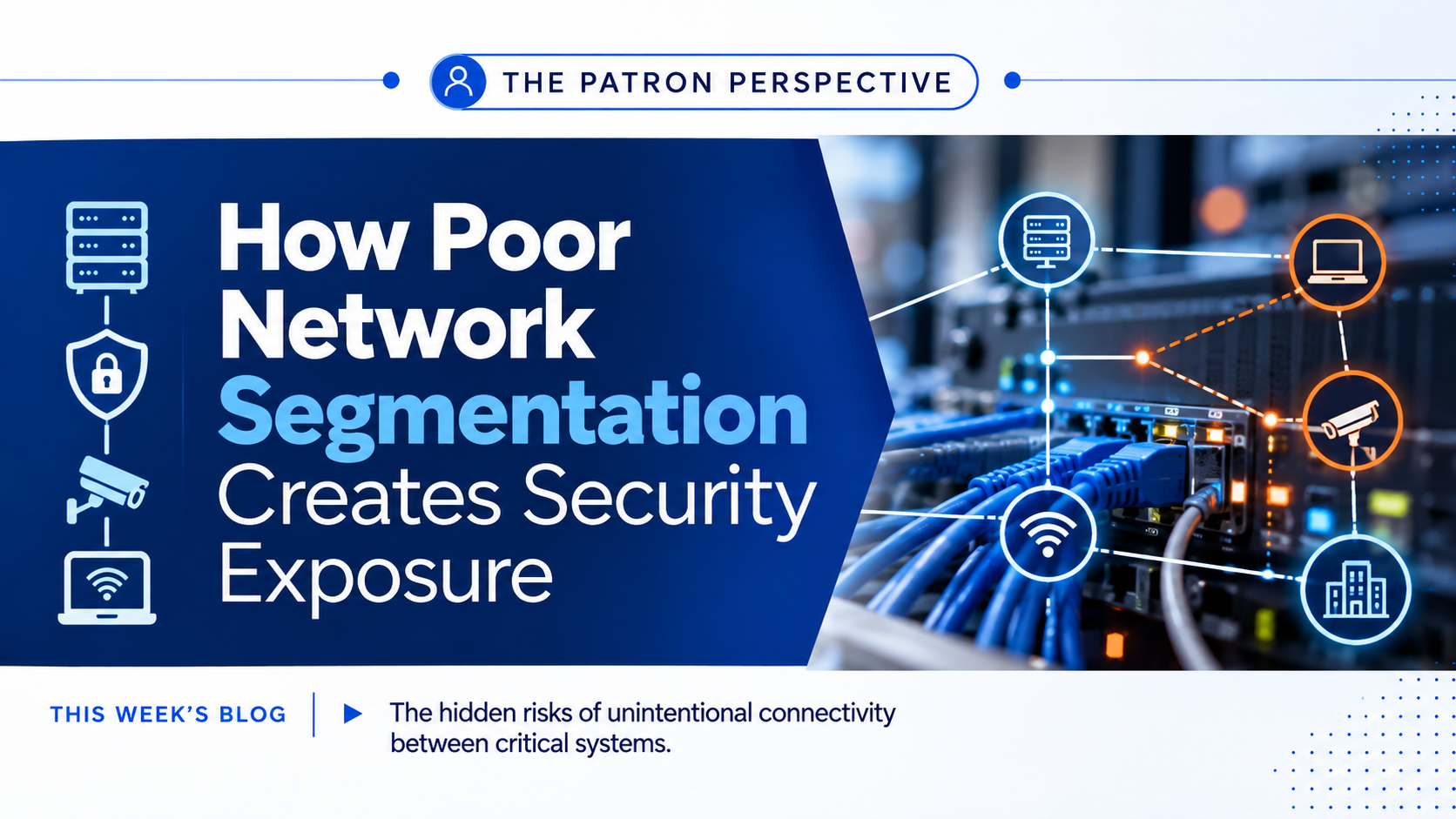
A campus may require segmentation between administrative systems and student networks. That requirement may be documented, approved, and communicated. Yet without physical and logical validation, there is no guarantee that segmentation exists as intended.
Cybersecurity breaks down in the space between what is written and what is true.
A More Grounded Approach
Stronger cybersecurity does not begin with adding more systems. It begins with understanding what is already in place.
That means:
• Verifying actual network paths, not relying on diagrams
• Confirming that redundancy is real, not assumed
• Testing recovery processes under controlled conditions
• Aligning ownership so responsibility is clear and enforced
This work is not fast, and it is not always comfortable. It often reveals gaps that have been carried for years.
But it replaces uncertainty with control.
Security That Supports the Institution
Higher education operates on openness. Research, collaboration, and access are part of the mission.
Security cannot come at the expense of that mission. At the same time, the absence of structure creates exposure that leadership ultimately owns.
The goal is not restriction. It is alignment.
When cybersecurity is grounded in verified infrastructure and clear accountability, it becomes an enabler. Systems perform as expected. Data is protected without unnecessary friction. Decisions are based on evidence rather than assumption.
What Experience Consistently Shows
Across institutions, certain patterns repeat:
• Systems believed to be isolated are connected through overlooked pathways
• Redundant environments share a single upstream dependency
• Monitoring tools generate alerts, but no one owns the response
• Data integrity is trusted until it is physically tested
These are not edge cases. They are common conditions that remain invisible until examined directly.
Moving Forward Without Adding Noise
Improving cybersecurity does not require sweeping change all at once.
It starts with a few disciplined steps:
• Establish a clear picture of current infrastructure
• Identify where assumptions have replaced verification
• Assign ownership for critical systems and processes
• Address the highest-risk gaps first
This approach does not rely on urgency or alarm. It relies on accuracy.
When institutions understand their environment at a practical level, cybersecurity becomes less reactive and more controlled. Risk is still present, but it is visible, measured, and managed before it becomes public.
Cybersecurity becomes more manageable when infrastructure is understood, verified, and owned clearly. If your institution is evaluating risk, planning upgrades, or questioning what exists beyond the documentation, we are available to help.