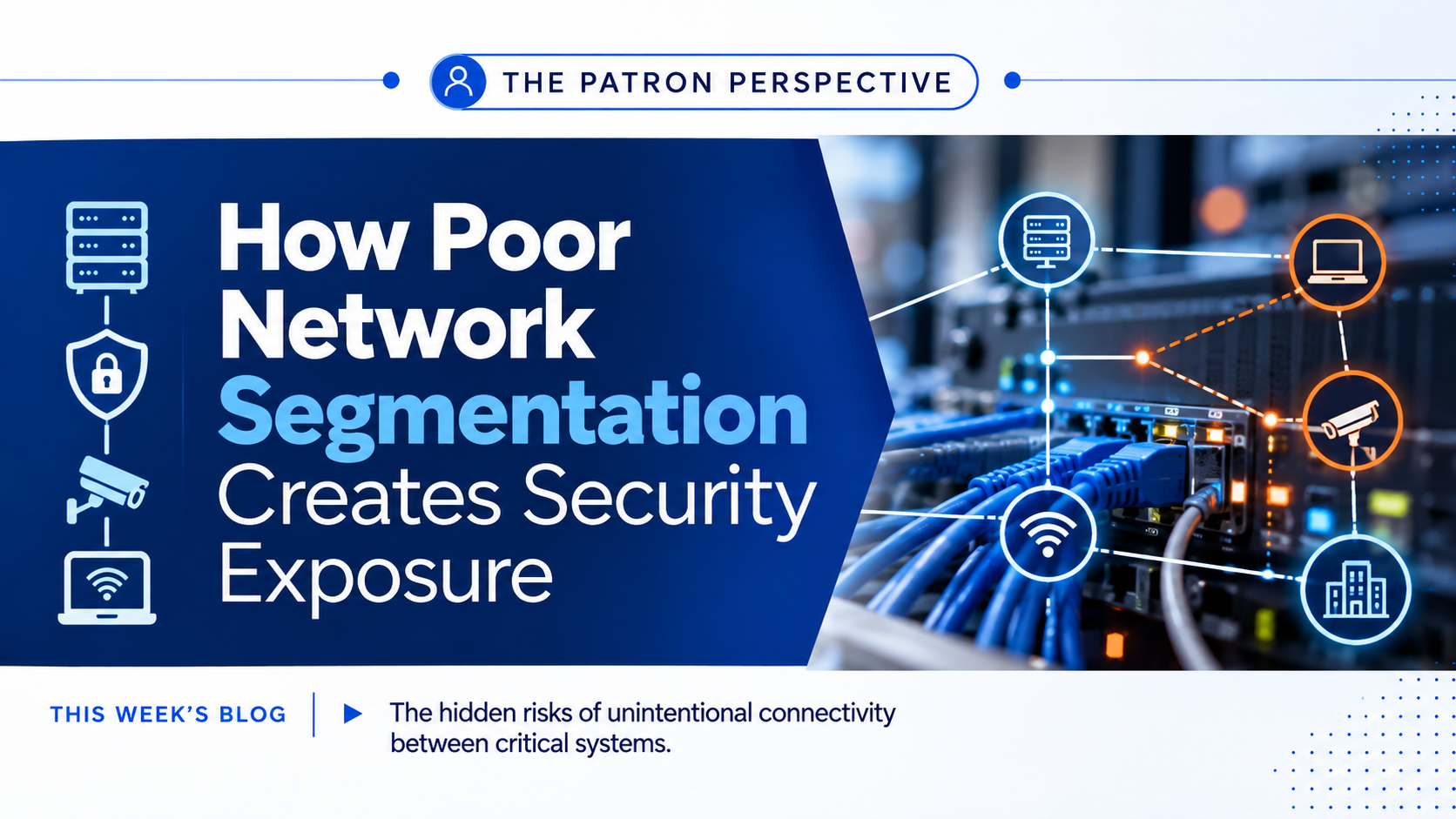

Expanding a network is often viewed as a capacity project. New buildings come online. Additional wireless coverage is installed. Remote facilities are connected. New systems require more bandwidth. Over time, the environment grows to support new operational needs.
What receives less attention is how each expansion changes the organization’s security posture.
Many security incidents are not caused by sophisticated attacks. They begin with infrastructure that has evolved faster than it has been reviewed. Small decisions made during separate projects accumulate into unnecessary exposure.
A network that was secure five years ago may no longer be secure today, even if every individual project was completed successfully.
Expansion Creates Complexity
Each network expansion introduces new devices, connections, and communication paths. Different project teams often make decisions based on immediate requirements rather than the overall architecture.
Over time, organizations may discover:
- Sensitive systems sharing network segments with general users
- Legacy equipment that no longer supports modern security controls
- Temporary connections that became permanent
- Network paths that bypass existing security policies
- Firewalls configured for old applications that are no longer in use
None of these issues typically appear in project closeout documents. They develop gradually as the environment grows.
Segmentation Is More Than Compliance
Network segmentation limits how traffic moves between different parts of the organization.
When implemented thoughtfully, segmentation helps reduce operational risk by limiting the impact of equipment failures, configuration mistakes, and security events.
Unfortunately, segmentation often reflects the network as it existed years ago rather than how it operates today.
Departments merge.
New facilities are added.
Cloud services are adopted.
Operational technology becomes connected.
Without periodic assessment, the logical network no longer matches operational reality.
Documentation Rarely Tells the Whole Story
Organizations frequently rely on diagrams that have not been updated after multiple projects.
Configuration files may differ from documented standards.
Switch ports may have been repurposed.
Temporary exceptions may remain years after construction is complete.
The only reliable approach is to validate the environment directly.
Independent assessments compare documentation with actual configurations, physical infrastructure, and traffic patterns to identify gaps before they become operational problems.
Common Areas of Exposure
Organizations are often surprised to discover:
- Administrative systems communicating across unnecessary network paths
- Legacy network segments that remain active despite no longer serving a business purpose
- Devices operating with outdated security settings
- Critical systems that share infrastructure with low-priority devices
- Inconsistent security policies between buildings or campuses
None of these conditions necessarily indicate poor management. They are common outcomes of years of successful expansion without periodic architectural review.
Independent Assessment Brings Clarity
A Network security exposure and segmentation assessment is not simply a vulnerability scan.
It evaluates how the network is designed, segmented, documented, and operated.
The objective is to identify unnecessary exposure while preserving operational reliability.
An independent assessment provides leadership with a clear understanding of where risk exists, which issues deserve immediate attention, and which improvements can be planned over time.
As organizations continue to expand, periodic review becomes an important part of maintaining a secure and resilient infrastructure.
Explore Our Solutions to learn how Patron Projects helps organizations evaluate network security exposure, validate segmentation strategies, and identify operational risks before they become security incidents.