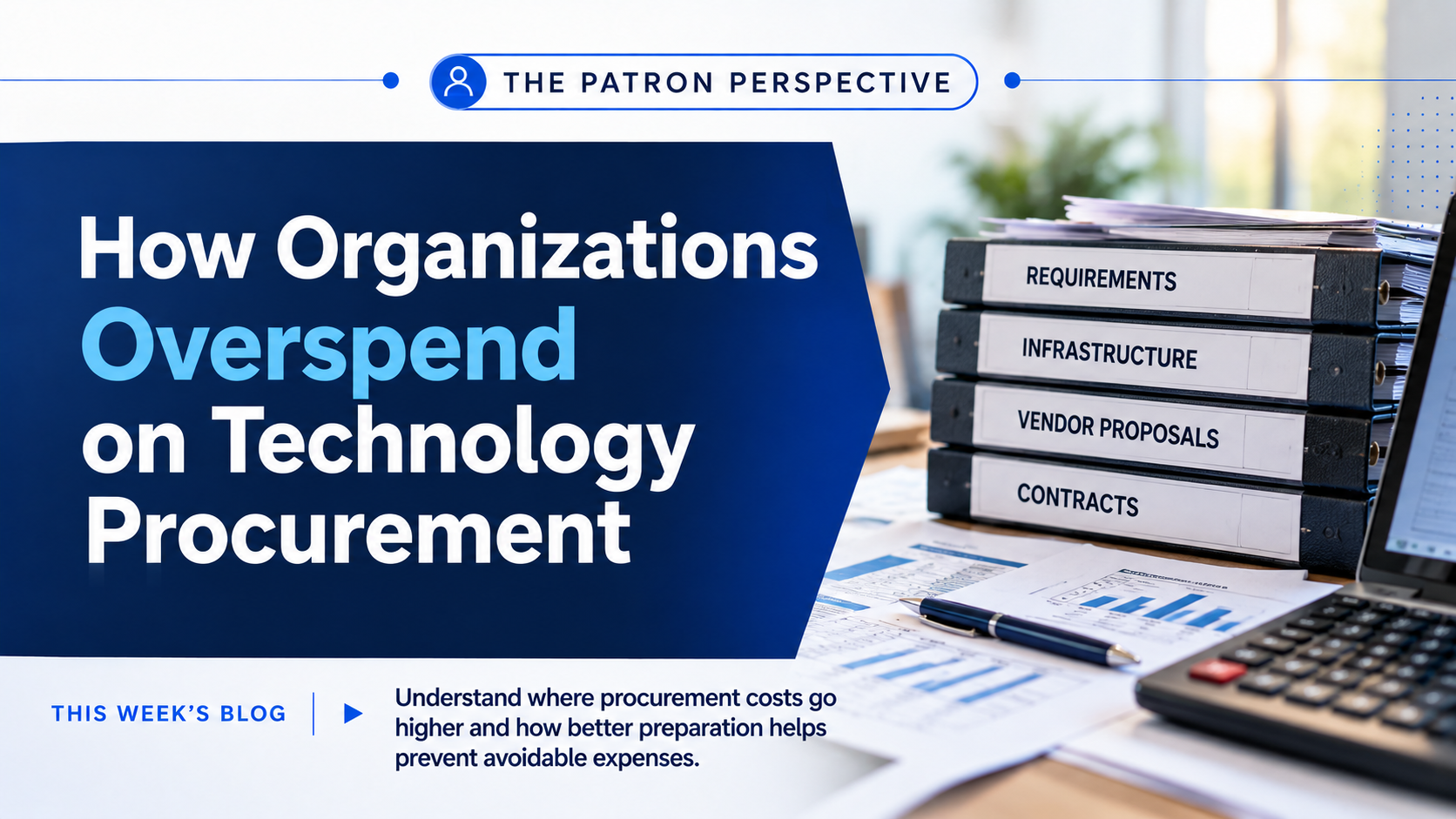
Technology procurement costs often begin climbing long before a purchase order is issued. The problem is rarely limited to the price a vendor quotes. More often, organizations spend too much because requirements were never fully defined, existing infrastructure was not adequately evaluated, or critical decisions were postponed until after the procurement process began.
By the time those gaps become visible, the institution may already be committed to a solution that requires additional equipment, contract modifications, or work that should have been anticipated.
The most effective way to control technology spending is to establish procurement readiness before asking vendors to provide pricing.
1. Unclear Requirements Create Expensive Assumptions
A procurement document can appear complete while leaving important operational requirements unresolved.
Consider a campus preparing to replace its network infrastructure. The equipment specifications may be detailed, but questions about existing fiber capacity, equipment room conditions, power availability, and installation responsibilities remain unanswered.
Vendors responding to that opportunity must make assumptions. Some will include additional equipment or services to protect themselves against uncertainty. Others may exclude work that will eventually be necessary. Both approaches create problems for the institution.
The result is a collection of proposals that may satisfy the written requirements but represent different interpretations of the project.
A lower initial price can become considerably more expensive once the missing work is identified.
Procurement readiness begins with clearly defining what the organization needs, what already exists, and which responsibilities must be included in the proposed solution.
2. Buying Technology Before Understanding Existing Infrastructure
One of the more common procurement mistakes is assuming that existing infrastructure can support the proposed technology.
A new surveillance system may require additional network capacity. A wireless expansion may depend on cabling that has never been tested against current requirements. A network equipment replacement may expose inadequate power distribution or insufficient cooling in telecommunications rooms.
These conditions are not unusual in institutional environments where infrastructure has evolved through years of renovations, departmental projects, and incremental upgrades.
The problem arises when procurement proceeds without validating those conditions.
Equipment arrives, installation begins, and the project team discovers that supporting infrastructure needs to be upgraded before the new systems can operate as intended.
At that point, the institution faces additional costs, schedule adjustments, and difficult conversations about why those requirements were not included in the original budget.
A physical infrastructure assessment before procurement can identify these dependencies while the organization still has flexibility to address them.
3. Poorly Structured Procurement Makes Vendor Proposals Difficult to Compare
Competitive procurement works best when every vendor is responding to the same clearly defined requirements.
Unfortunately, that is not always what happens.
One vendor may include configuration, testing, documentation, and training. Another may provide equipment and basic installation while treating those activities as additional services. A third may propose substitutions that meet certain technical specifications but introduce different maintenance or support requirements.
Without a consistent evaluation framework, procurement teams can end up comparing prices rather than complete solutions.
The lowest proposal may exclude essential work, while a more expensive proposal may include services that the institution genuinely needs.
Neither conclusion should be reached without understanding the differences.
A well-prepared procurement package establishes common requirements, deliverables, acceptance criteria, and responsibility boundaries. It also identifies where alternatives are permitted and how those alternatives will be evaluated.
This makes vendor responses easier to compare and gives the institution a stronger basis for selecting a solution that meets its operational needs.
4. Change Orders Often Reveal Decisions That Were Never Made
Change orders are sometimes unavoidable. Existing conditions can be unpredictable, particularly in older facilities.
However, many procurement-related changes originate from decisions that should have been resolved before a contract was awarded.
Unclear installation boundaries, incomplete equipment inventories, missing testing requirements, and undocumented system dependencies can all become sources of additional cost.
A contractor may reasonably identify work outside the original agreement. The institution may reasonably believe that work should have been included. Resolving that disagreement consumes time and often introduces additional expense.
The better approach is to establish clear ownership of project requirements before procurement begins.
That includes identifying who is responsible for infrastructure preparation, equipment compatibility, system integration, testing, documentation, and final acceptance.
When these responsibilities are documented early, project teams have fewer opportunities to discover conflicting expectations during execution.
5. Procurement Readiness Is a Management Decision
Organizations often devote considerable effort to negotiating equipment prices while giving less attention to the decisions that determine the overall cost of a project.
A competitive price is valuable, but it cannot compensate for an incomplete scope, unsuitable infrastructure, or poorly defined contractual responsibilities.
Effective procurement readiness brings technical, operational, financial, and facilities stakeholders together before the institution commits to a purchase.
It establishes a common understanding of what is being purchased, why it is needed, what conditions must be addressed, and how successful delivery will be verified.
This preparation also improves budget credibility. Leadership can evaluate a more complete project cost rather than approving an equipment estimate that excludes necessary supporting work.
For institutions managing multiple technology initiatives, the same discipline helps establish consistent procurement standards and reduces the likelihood of repeating avoidable mistakes across projects.
The strongest procurement outcomes begin with informed decisions made before vendors are asked to submit proposals.
How Patron Projects Can Help
Patron Projects provides independent procurement readiness assessments, requirements validation, and procurement oversight to help institutions identify gaps before committing resources. Our role is to represent the institution’s interests, establish clear expectations, and help ensure procurement decisions reflect actual operational requirements.