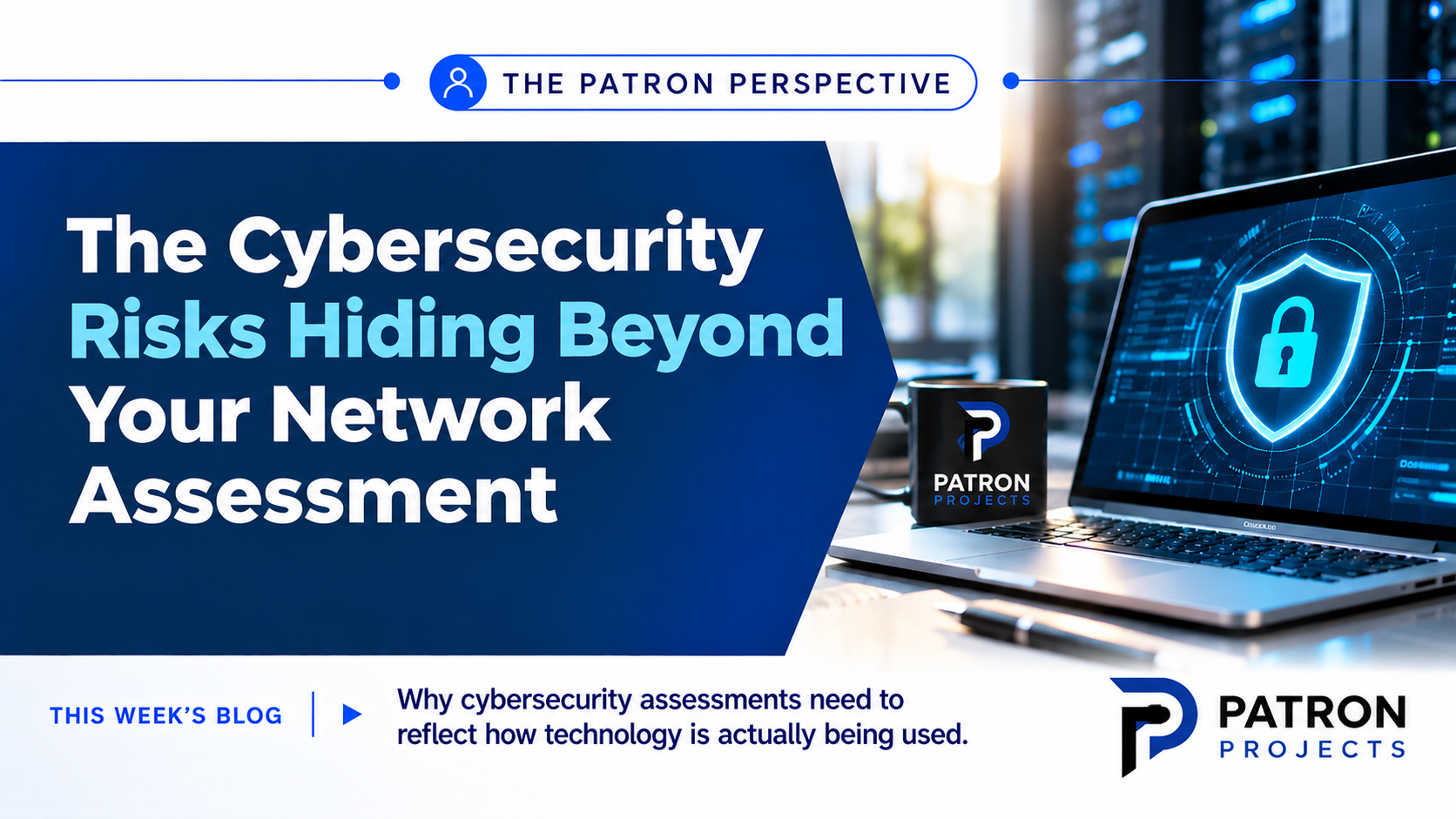
A cybersecurity assessment can confirm that firewalls are configured, network segments are separated, and access controls are documented. Those findings matter. But they do not necessarily tell leadership how information is moving through the organization, who has access to it, or whether new technology is introducing risks outside established oversight.
Artificial intelligence is making that gap harder to ignore.
Across institutional environments, departments are adopting new tools to summarize documents, analyze information, automate routine work, and support operational decisions. Some are formally approved. Others are introduced through individual subscriptions, departmental purchases, or features embedded in software already in use.
The result is a growing difference between the systems an organization believes it manages and the systems actually handling its information.
Security Assessments Need to Reflect How Technology Is Used
Traditional network security reviews often concentrate on identifiable infrastructure: firewalls, switches, servers, wireless networks, authentication systems, and data centers.
These are essential components of a secure environment. However, reviewing them individually can leave important operational relationships unexamined.
Consider a department that begins using an external artificial intelligence service to analyze internal reports. The network may be properly segmented, the user may have valid credentials, and the endpoint may comply with established security requirements.
Yet sensitive institutional information may still be transferred to a service that has never undergone a formal security review.
The issue is not necessarily a failure of network protection. It is a failure to establish visibility and accountability across the entire technology environment.
An effective assessment needs to consider both infrastructure security and the way information moves through approved and unapproved systems.
Shadow Artificial Intelligence Creates an Accountability Problem
Shadow artificial intelligence refers to artificial intelligence tools or capabilities being used without appropriate organizational visibility or approval.
The challenge is broader than employees experimenting with publicly available services. Artificial intelligence capabilities are increasingly incorporated into existing applications, cloud platforms, productivity software, and vendor-managed systems.
An institution may have a reasonably accurate software inventory while still lacking a clear understanding of which applications process institutional information through artificial intelligence.
That creates several practical concerns.
Data handling requirements may not be consistently evaluated. Access permissions may be broader than intended. Vendor agreements may not adequately address information retention, processing, or disclosure. And departments may be making independent decisions about risks that ultimately belong to the institution.
These conditions are difficult to correct when ownership is unclear.
Before an organization can manage these risks, it needs a reliable inventory of the systems in use, the information those systems handle, and the individuals responsible for approving them.
Established Security Frameworks Provide a Starting Point
Organizations do not need to abandon their existing cybersecurity governance practices to address artificial intelligence.
The National Institute of Standards and Technology Cybersecurity Framework provides a structure for governing, identifying, protecting, detecting, responding to, and recovering from cybersecurity risks.
The National Institute of Standards and Technology Artificial Intelligence Risk Management Framework adds considerations specific to artificial intelligence systems, including governance, measurement, and the management of risks throughout their lifecycle.
Used together, these frameworks can help institutions evaluate artificial intelligence within a broader cybersecurity program rather than treating it as an isolated technology initiative.
The important work is translating those frameworks into practical assessments.
Which systems are currently operating? What information can they access? Who approved their use? How are vendors evaluated? What controls are in place? Who is responsible when a finding requires corrective action?
A framework provides structure, but the value comes from documenting actual conditions and assigning responsibility for improvement.
Infrastructure and Governance Cannot Be Evaluated Separately
Artificial intelligence is one example of a broader problem Patron Projects regularly addresses in complex technology environments: the difference between documented expectations and operational reality.
A network diagram may show segmentation that no longer reflects actual connectivity. A data center may have redundant equipment without genuinely independent infrastructure paths. An access policy may appear adequate until permissions are examined across connected systems.
These conditions can persist because responsibility is divided among information technology, security, facilities, procurement, and individual departments.
Cybersecurity improvement requires coordination across those boundaries.
For network security and data center modernization initiatives, that means validating the existing environment before defining corrective projects. It also means establishing clear requirements, realistic priorities, and accountable ownership before procurement or implementation begins.
Technology upgrades should address documented risks rather than assumptions about what might be wrong.
Turn Assessment Findings Into an Actionable Plan
A useful cybersecurity assessment should leave leadership with more than a list of vulnerabilities or a maturity score.
It should establish which risks matter most, what conditions are creating them, which corrective actions are practical, and who is accountable for carrying them out.
Some findings may require technical changes, including network segmentation, access restrictions, infrastructure upgrades, or improved monitoring. Others may require changes to procurement procedures, vendor governance, departmental approval processes, or information handling policies.
The distinction matters because not every cybersecurity problem can be solved by purchasing another security product.
Independent assessment and disciplined project leadership help organizations make those decisions with a clearer understanding of existing conditions, costs, dependencies, and operational consequences.
Cybersecurity is ultimately a matter of maintaining control over the systems and information an institution depends on.
That begins with knowing what is actually operating, understanding where responsibility sits, and addressing the gaps before they become larger problems.
Patron Projects helps institutions assess network security conditions, coordinate infrastructure improvements, and maintain independent oversight throughout complex technology initiatives.