Fiber documentation often feels like a secondary concern until something fails. During an emergency upgrade, outage, or unplanned infrastructure change, incomplete records can turn what should be a controlled response into a field investigation.
The problem is rarely that experienced teams cannot troubleshoot fiber. The problem is that they are forced to spend critical time determining what is actually connected, where strands terminate, which pathways are in use, and whether the documentation they have can be trusted. Good fiber documentation removes that uncertainty before the emergency begins.
An Emergency Is the Wrong Time to Map the Network
When a fiber issue affects a building or a critical service, the first question is basic: Which cable serves the location? Which strands are active? Where do they terminate? What equipment depends on them?
Those questions should already have answers.
Instead, teams often encounter labels that no longer match records, spreadsheets maintained by different groups, drawings that reflect original construction rather than current conditions, or undocumented changes made during previous projects. The fiber may be physically intact and operational, but the organization lacks a reliable picture of how it is being used.
That creates a practical problem during emergency work. Before technicians can confidently move, replace, splice, or repurpose fiber, someone has to reconstruct enough of the existing environment to understand the consequences.
Bad Documentation Changes the Risk of the Work
An emergency upgrade already carries pressure. There may be a limited outage window, affected users waiting for service, contractors mobilized quickly, and leadership expecting a clear restoration plan.
Incomplete fiber records add another variable: uncertainty about the infrastructure itself.
A strand that appears available may be carrying a service that was never recorded. A route assumed to be diverse may share a pathway with the connection it is intended to protect. A panel designation may point technicians toward the right room but the wrong termination. These are not unusual technical problems. They are documentation problems that become operational problems when time is limited.
The safest response is often to verify before making changes. That is necessary, but it also means emergency time is being spent performing discovery that could have been completed under normal operating conditions.
Useful Documentation Has to Reflect Physical Reality
Fiber documentation is valuable only when people can rely on it.
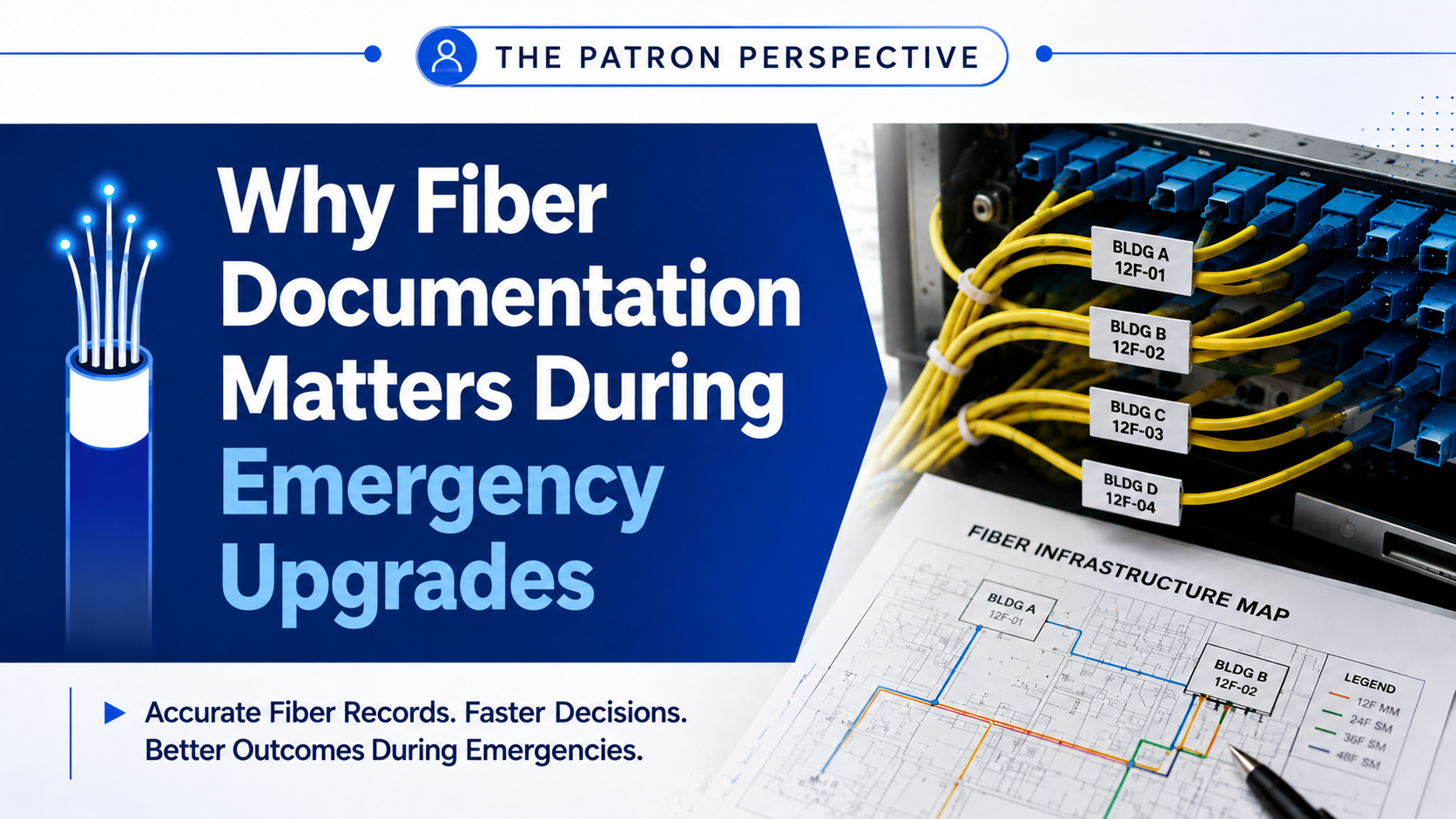
That means more than maintaining a drawing showing connections between buildings. Useful records should make it possible to understand cable routes, termination points, strand assignments, labeling conventions, and the relationship between the documented network and the infrastructure technicians will actually encounter in the field.
The distinction matters because infrastructure changes over time. Renovations happen. Equipment moves. New fiber is installed alongside old fiber. Temporary decisions become permanent. Documentation that is not updated eventually becomes historical information rather than an operational tool.
A disciplined documentation effort reconciles records with physical conditions. Labels, pathways, terminations, and assignments are verified so the organization knows where the documentation is authoritative and where additional investigation is still required. That approach reflects Patron Projects’ emphasis on validating physical infrastructure rather than relying solely on what existing drawings claim.
Documentation Makes Emergency Decisions Smaller
The real value of accurate fiber records is not the documentation itself. It is the number of decisions that no longer have to be made during an outage.
When the environment is mapped and labeled consistently, teams can narrow the problem faster. They can identify affected connections, understand available options, communicate clearly with contractors, and evaluate a proposed change without first rebuilding the history of the network.
That does not eliminate the unexpected. Fiber can still be damaged, equipment can still fail, and emergency upgrades can still uncover conditions nobody anticipated. But the response begins with a known infrastructure baseline instead of assumptions.
For institutions managing large campuses, distributed facilities, or aging infrastructure, that difference matters. Emergency work should focus on correcting the problem, not discovering the network.
Patron Projects helps institutions verify, label, and map fiber infrastructure so documentation reflects what is actually in the field and can support both planned projects and unexpected work.
Explore Our Solutions: Fiber Labeling and Mapping